25% off on product page · save $4.66
Can Dogs Eat Human Food? A Thoughtful Way to Share
A complete and balanced dog food should provide the foundation of most dogs’ diets unless a veterinarian recommends a different plan. Human food works best as an occasional extra, not a replacement for meals formulated to provide the nutrients dogs need.
Sharing a little cooked chicken is also different from feeding a home-cooked diet every day. Regular homemade meals require careful planning to avoid nutritional gaps; ask a veterinarian or veterinary nutritionist for guidance before making that switch. Your dog’s age, size, health conditions, medications, and food sensitivities can all affect which foods and portions are appropriate. A treat that agrees with one dog may upset another dog’s stomach.
Check the listed dimensions for start with the food already in your dog’s bowl against the available vehicle space before use.
Judge a dish by all its ingredients, not its main ingredient. Chicken may sound suitable, but chicken cooked with onion, garlic, rich sauce, or heavy seasoning is a different choice. Check mixed dishes for sweeteners, cooking fats, sauces, and toppings before offering a bite. If you cannot confirm what is in the food, skip it.
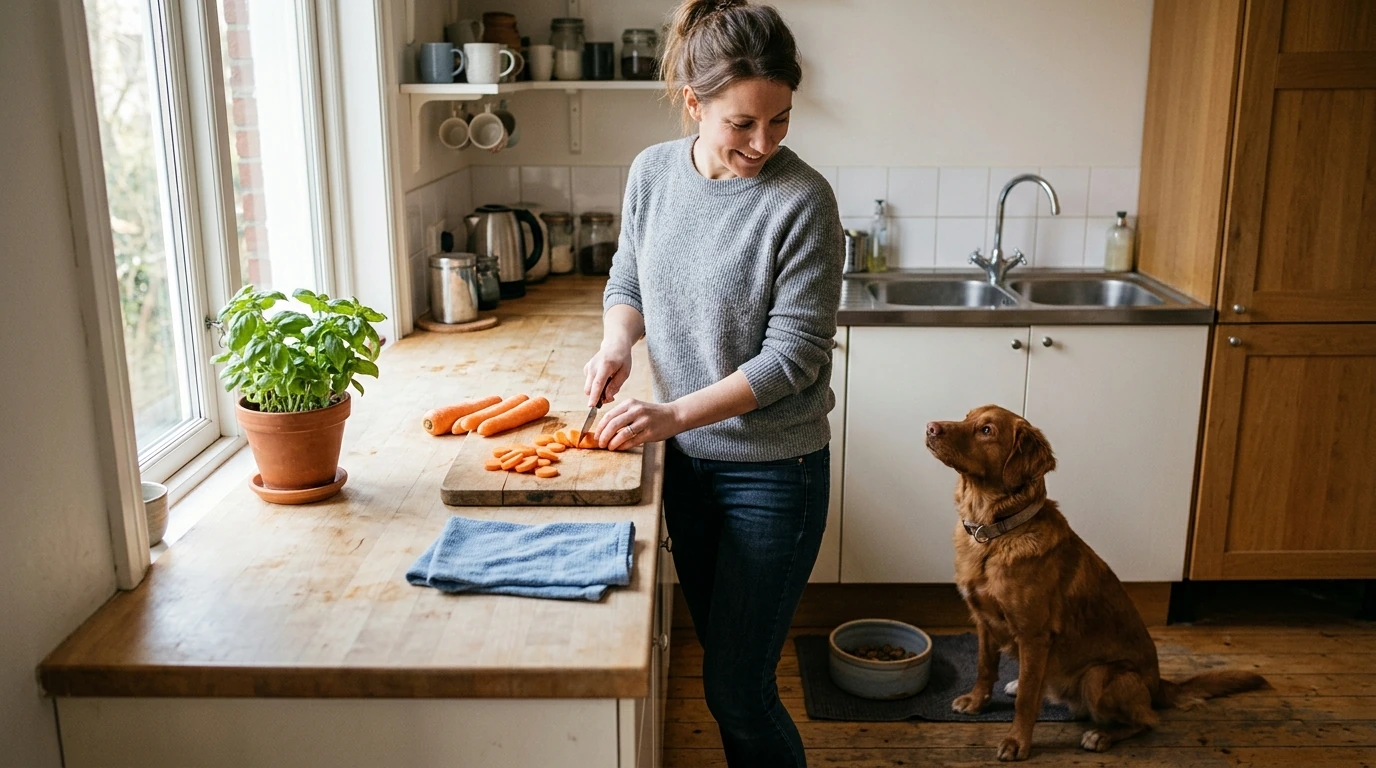
Choose a small amount of plain food and prepare it for your dog. Remove bones, pits, cores, and other potential choking hazards where applicable; cut firm foods into manageable pieces. Introduce just one new food at a time so it is easier to spot a reaction. Watch for vomiting, diarrhea, itching, or other unusual symptoms, and contact your veterinarian if you are concerned.
Quick check before sharing food
| Food | General guidance | Preparation reminder |
|---|---|---|
| Plain, cooked chicken | Can be an occasional treat for many dogs | No bones, skin, onion, garlic, or seasoning |
| Carrots or green beans | Can be an occasional treat for many dogs | Serve plain in bite-size pieces |
| Apple | Can be an occasional treat for many dogs | Remove the core and seeds; cut into small pieces |
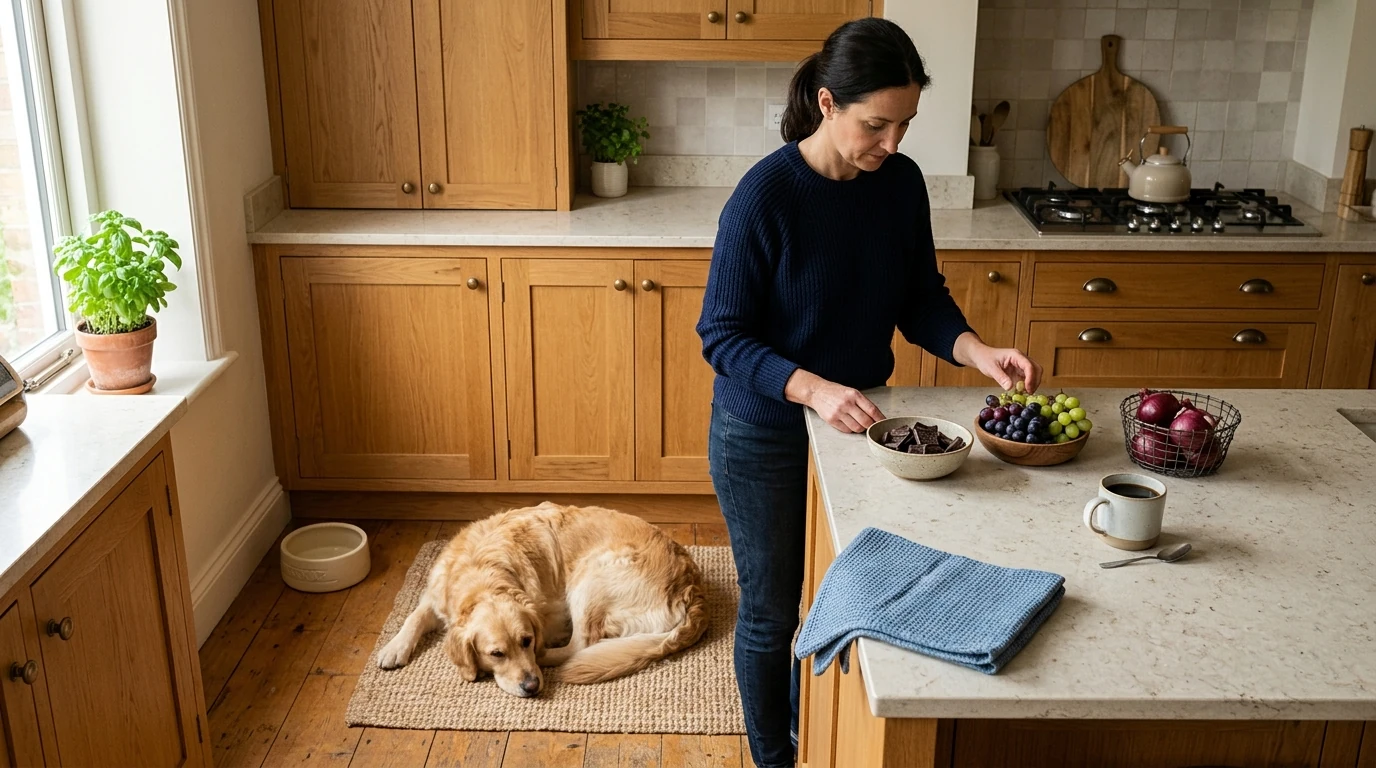
| Grapes or raisins | Do not feed | Seek veterinary advice promptly after suspected ingestion |
| Chocolate or xylitol-containing foods | Do not feed | Keep out of reach; contact a veterinarian promptly after suspected ingestion |
Count shared food as a treat, along with biscuits, training rewards, and other extras. Treats should make up only a small part of your dog’s daily calories. If you are unsure what “small” means for your dog—especially if weight management or a medical condition is involved—ask your veterinarian for a suitable amount.
Featured in this guide
Navigating Human Food for Your Pup – Practical Dog Feeding eBook Answering “can I feed my dog human food” | Safe Foods, Toxic Foods & Easy Meal Planning Guide
| Food | General guidance | Preparation |
|---|---|---|
| Cooked chicken | An occasional treat for many dogs | Plain, without bones, skin, onion, garlic, or seasoning |
| Carrots or green beans | An occasional treat for many dogs | Plain, in bite-size pieces |
| Apple | An occasional treat for many dogs | Remove the core and seeds; cut into small pieces |
| Grapes or raisins | Do not feed | Seek veterinary advice promptly after suspected ingestion |
| Chocolate or foods containing xylitol | Do not feed | Contact a veterinarian promptly after suspected ingestion |
Your dog’s age, size, health conditions, medications, and sensitivities can change what is appropriate. Ask your veterinarian what a suitable treat portion looks like for your dog, particularly if weight management or a medical condition is involved.
Do not offer grapes or raisins, chocolate, foods containing xylitol (sometimes labeled birch sugar), onions, garlic, alcohol, or macadamia nuts. Xylitol can appear in sugar-free gum and candy. Cooked bones can splinter, and fatty scraps may cause digestive trouble.
Secure food waste, candy, and gum—including anything tucked into a handbag a curious dog could reach. If you suspect your dog has eaten something toxic, contact your veterinarian or an animal poison-control service promptly. Do not wait for symptoms or induce vomiting unless a professional tells you to. Have the packaging or ingredient list ready if you can retrieve it safely.
Use the same sequence each time: check the ingredients, prepare a dog-sized portion, count it among the day’s treats, and observe your dog afterward. For owners who want an optional reference for food checks and meal-planning questions, the Navigating Human Food for Your Pup eBook can help organize those decisions. It does not replace advice tailored to your dog from a veterinarian.
“HBD diet” can refer to different eating plans, so there is no reliable set of 10 rules without knowing which plan you mean. If you are considering it for a dog, ask a veterinarian before changing the dog’s diet.
“5 5 5” is used for different human eating tips and is not an established dog-feeding rule. For your dog, follow the feeding guidance for its complete and balanced food and ask a veterinarian about treats.
Human diets varied by region and season and could include hunted animals, fish, and gathered plants. Ancient human diets are not a guide to a modern dog’s nutritional needs.
For senior dogs, there is no universally best fruit. A few small pieces of plain apple with the core and seeds removed may suit some dogs, but health conditions and medications can change what is appropriate.
Look for a complete and balanced dog food appropriate for your dog’s life stage rather than a “non-toxic” label or one appealing ingredient. Ask your veterinarian for help if your dog has medical or dietary needs.


Leave a comment