50% off on product page · save $15.99
How Parents Can Prevent Bullying and Build Confidence

Try a brief check-in during something familiar, such as a walk, a drive, or dinner preparation. A low-pressure moment may feel easier than a formal conversation. Ask open questions: “Who did you spend time with today?” or “Was there anything that felt uncomfortable?” You can ask about online interactions, too, without assuming every difficult exchange is bullying.
If your child tells you something concerning, start with “Thank you for telling me.” Let them finish before offering solutions or contacting anyone. Ask what happened, whether it has happened before, and how they felt afterward. Avoid promising to keep it secret: explain that you will involve a trusted adult if that is necessary to help keep them safe, and tell your child what you plan to share.
Make one point clear: being bullied is never your child’s fault. You can practice a brief response, moving toward a trusted adult, or staying near supportive peers. Ask which options feel safe where the behavior occurs; a classroom, bus, and group chat call for different choices.
Practice can help your child feel prepared, but adults remain responsible for addressing harmful behavior. Make room for friendships and activities where your child feels included, without suggesting that confidence alone will stop bullying.
Check the listed dimensions for build confidence without assigning blame against the available vehicle space before use.
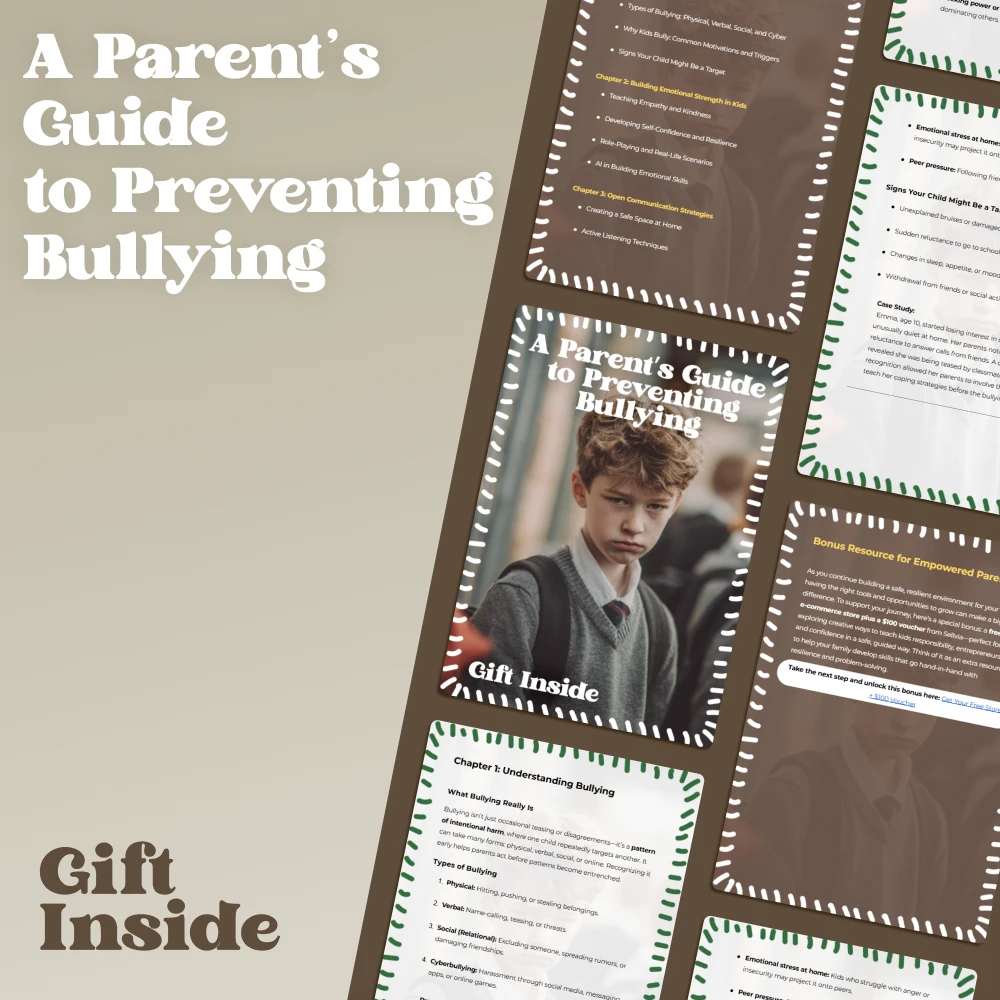
Featured in this guide
A Parent’s Guide to Preventing Bullying | Practical eBook for Parents on how to prevent bullying, Build Confidence & Stop Bullying Before It Starts
If your child shares a concern, say, “Thank you for telling me.” Ask what happened, whether it has happened before, and how they felt. Do not promise secrecy if another trusted adult may need to help keep them safe; explain what you plan to share.
For repeated name-calling or exclusion, write down the details and speak with a teacher or counselor. For hurtful posts, save relevant messages and use the platform’s reporting tools where appropriate. If there are threats, physical harm, or immediate danger, move your child toward safety and contact the school or appropriate emergency services promptly.
Tell your child’s teacher, counselor, or school administrator what happened, when and where it happened, and how it is affecting your child. Ask who your child can approach during the school day, including in less-supervised places.
Before the conversation ends, agree on a follow-up date and how the school will communicate with you while respecting other students’ privacy. Tell your child which adult they can go to and what they can say. If the behavior continues, share new details and ask what additional support is available.
Check the listed dimensions for make a plan with the school against the available vehicle space before use.
Prevention is ongoing as friendships, classrooms, and online spaces change. Our A Parent’s Guide to Preventing Bullying eBook is a resource for parents focused on preventing bullying and building confidence. If that is the support you want, use it alongside your child’s account and your school’s policies—not in place of either.
Compare related options such as How to Avoid Fake Discounts Using Price History Checklist | Digital Download Guide for Smart Online Shoppers, eBook, Printable PDF to match features, dimensions, and use case before choosing.
Before choosing, compare the product details with your daily routine, available space, care needs, and preferred setup. The strongest option is usually the one that fits the intended use clearly and remains simple to clean, store, and check before repeat use.
Keep communication open, model respectful behavior, support healthy friendships, and practice safe ways for your child to seek help. Learn how your school handles concerns so you know whom to contact.
Solutions depend on the situation, but may include adult intervention, a school safety plan, support for the affected child, and continued follow-up. If danger is immediate, address safety first.



Leave a comment