Many EVs also let you view battery level and estimated range at a glance, but you should treat the estimate as a planning aid rather than a promise. Cold weather, highway speeds, steep routes, and heavy climate-control use can affect how far you travel between charges.
Start with your charging routine
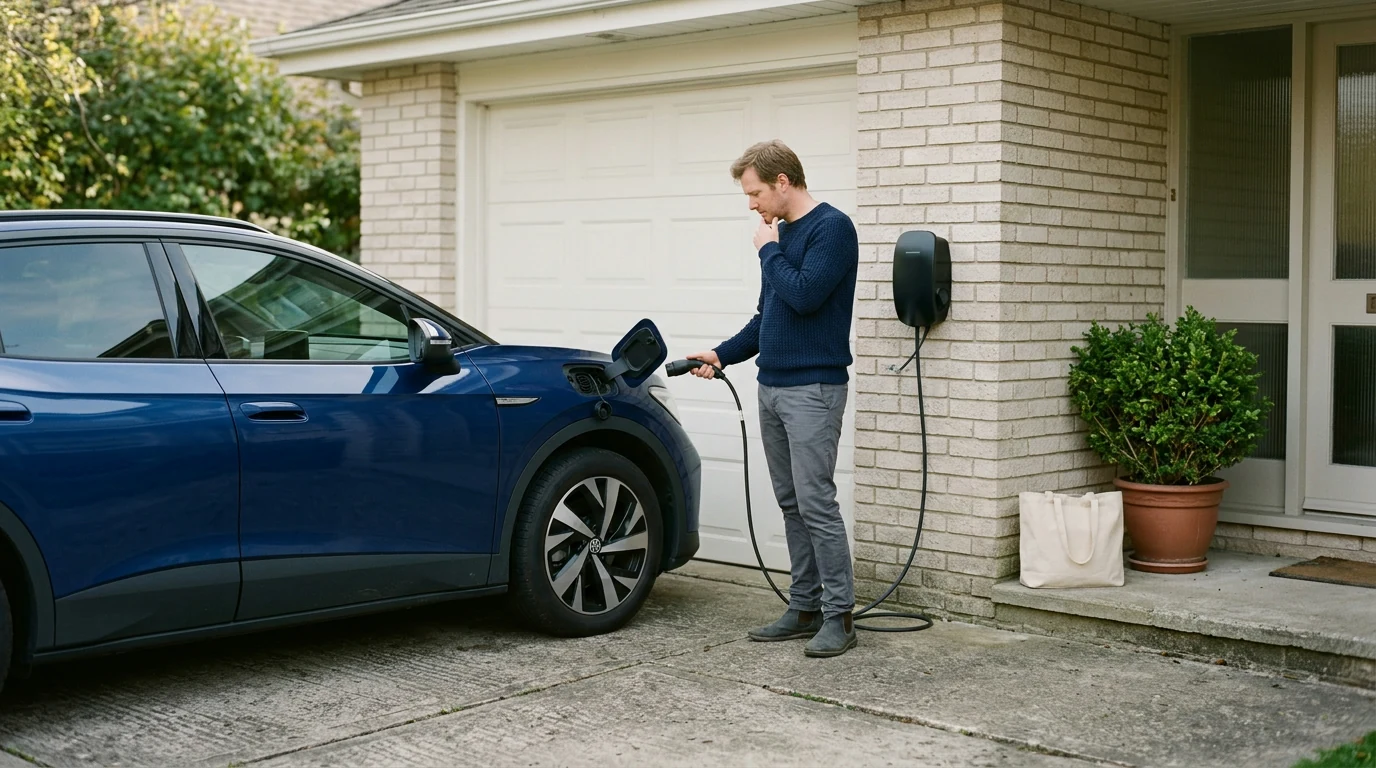
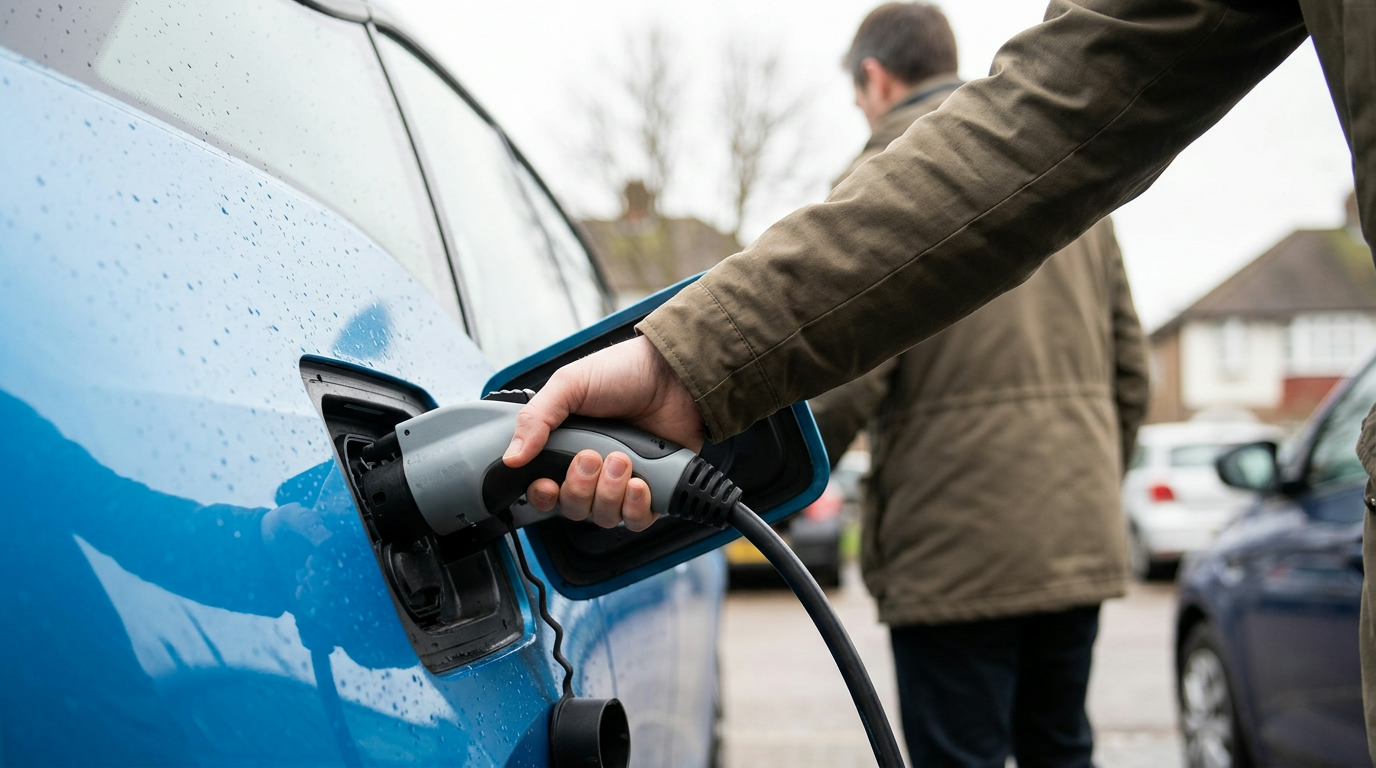
An EV is easiest to live with when you can charge where you regularly park, such as at home or at work, without moving the car just to plug in. If you would depend on public charging, look at stations near your usual routes and consider whether their locations, connector types, and charging speeds work for your schedule and the car you are considering.
Before buying, compare your typical weekly mileage with the vehicle’s range and map out how you would handle longer trips. Our team recommends thinking through an ordinary busy week—not just an ideal day—so charging remains convenient when your plans change.
Featured in this guide
Electric Cars: A Beginner’s Roadmap | Electric Cars Basics for New Buyers | Simple EV Guide, Buying Checklist & Smart Decision Ebook
For a first vehicle, visibility, seating position, controls, insurance costs, and overall size matter as much as whether the car is electric. Test-drive candidates on familiar roads, practice parking, and make sure you understand the driver-assistance features without treating them as a substitute for attentive driving.
If you are sorting through those decisions, our Electric Cars: A Beginner’s Roadmap is a starting point for new buyers. You can also return to our guide to whether electric cars are good for beginners as you compare your options.
See if Electric Cars: A Beginner’s Roadmap | Electric Cars Basics for New Buyers | Simple EV Guide, Buying Checklist & Smart Decision Ebook fits your setup










Leave a comment